
We were recently asked to make multiple book cradles for an upcoming exhibition at a local museum. We therefore thought it was a good time to review our current design and process, in order to create an updated in-house model. This could then be used for future permanent or temporary exhibitions.
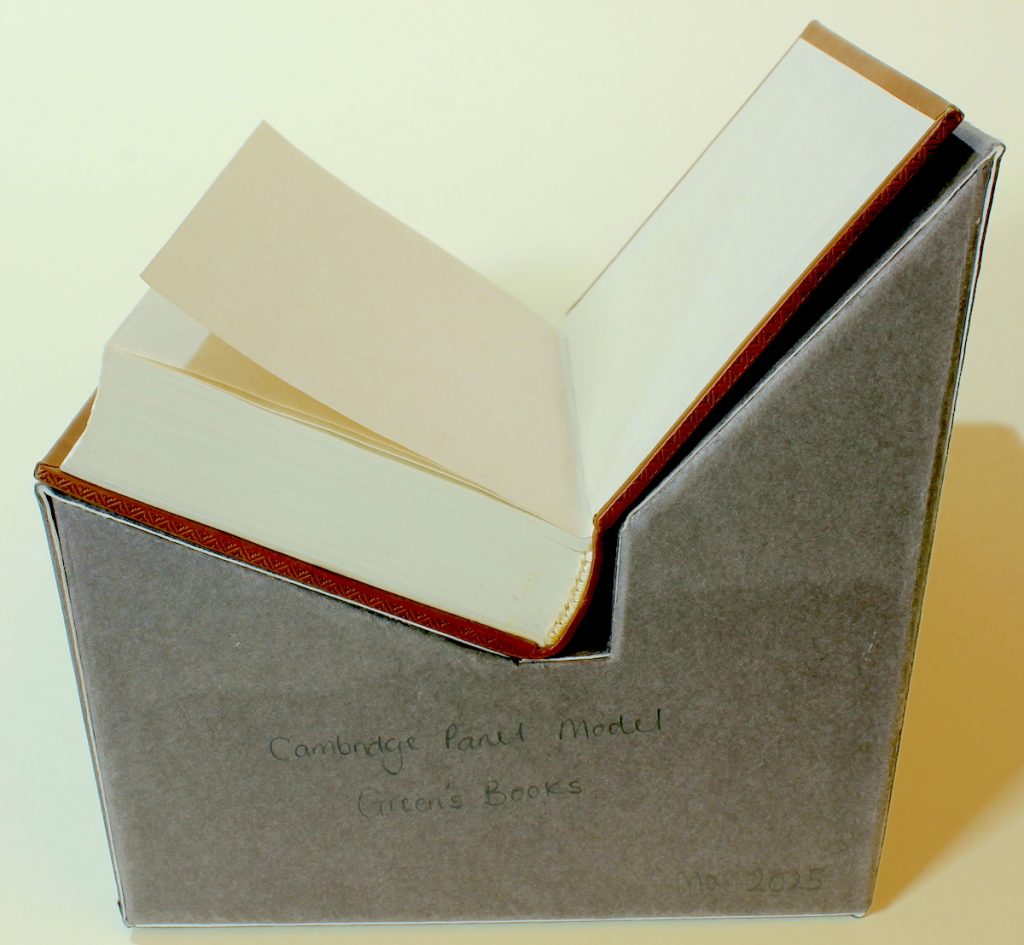
What is a book cradle?
Book cradles are bespoke hand-made objects. They allow a book and its contents to be displayed in the best way for the viewer. They are designed to be minimally intrusive, so the book takes centre stage, while also fully supporting the text to reduce stress on the binding.
When designing the cradle we wanted to make sure it was: consistently reproducible, efficient to make, easy to install by the curator themselves, conservation appropriate, and environmentally friendly.
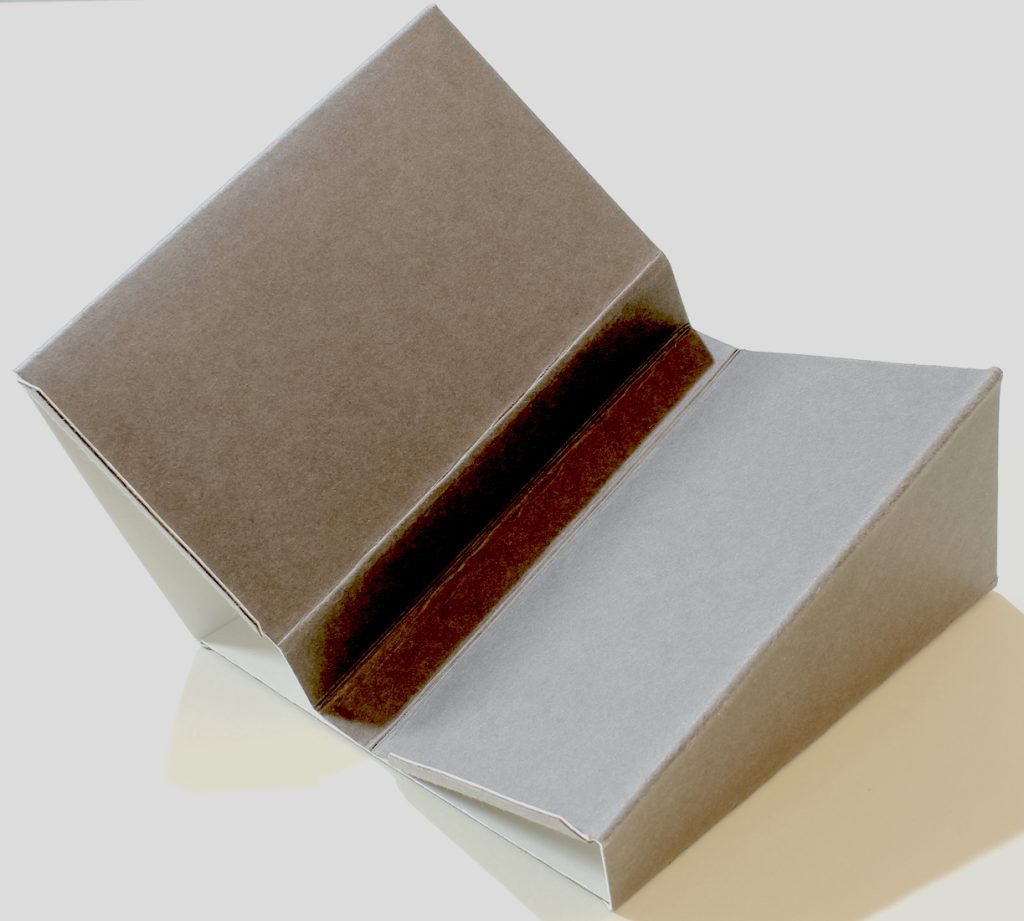
How do we make our book cradles?
The first step in making a cradle is to carefully trace a profile of the opening onto a large sheet of paper. This is later used as a template for the cradle. The height and width of the sides supporting the book are designed to be marginally smaller than the boards, so the cradle is hidden from view when the book is placed on it. Large and heavy books would be kept flat to ensure the most support for the binding. However, some books are able to be displayed tilted at an angle, toward the viewer. This enables easier visibility to the opening on display, but also raises other problems such as; how much to tilt it and how to stop it falling off the cradle.
There is no industry standard angle to tilt a book cradle and various texts and specialists have stated anywhere up to 45°. Personally, I find this to be extremely steep! For our own model we chose to angle the book by 20°. This angle was chosen based on Christopher Clarkson’s foam book supports whereby he states that this angle is the best compromise between light and heavy weight books. [1]
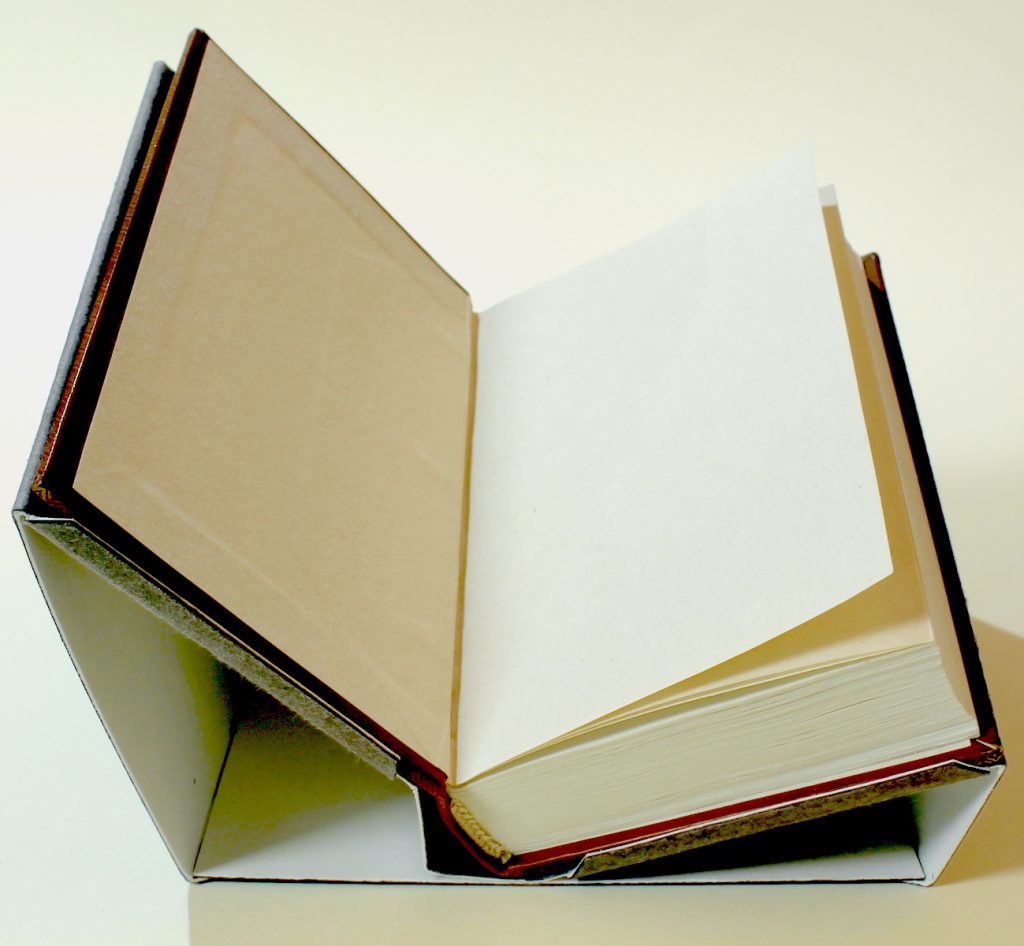
To add additional support to the shape of the cradle when angled, and counteract the book slipping down, we added in two features. Firstly, we constructed a back plate. This is attached via tabs to the inside of the back of the cradle. This produces a very solid foundation and shape to support the book correctly. Secondly, we created a lip for the tail edge of the book to rest on. This was achieved by wetting a strip of boxboard and creasing into the necessary shape. This was then glued on separately once fully dried.
What makes this cradle great?
The front aperture remains open to allow the easy and neat addition of polyethylene strapping by the curator when installing the books. This makes the book cradles customisable and ensures the attachment is hidden from sight.
Our cradles are made entirely from archival brown box board from John Purcell. The smooth finish means it is suitable for use with all covering materials, especially abraded and deteriorating bindings. It also means once an exhibition comes to an end the cradle can be recycled (unlike Perspex cradles which tend to accumulate in forgotten piles in storage rooms).
Anna-Marie Beauchamp, March 2026
[1] Conservation Resources (2025) Clarkson Book Support System. Available at: https://conservation-resources.co.uk/products/clarkson-book-support-system?srsltid=AfmBOorxXVD961RTqLTfLIxFKH6GCC6sNl-2c9_kY6z7DNGawuUZbDly (Accessed 23 June 2025).